


May 19, 2026
The Evolution of Cell Phones: From Portable Phones to Pocket-Sized Computers
Cell phones have completely changed the way people communicate, work, shop, study, and access information.
What began as a large, heavy device limited to voice calls has become a true pocket-sized computer, capable of connecting people, businesses, services, and apps in real time.
The evolution of cell phones shows how mobile technology has become one of the biggest revolutions in modern life. Today, smartphones are part of the daily routine for billions of users and combine features that once required several different devices, such as a phone, camera, calendar, computer, GPS, bank, television, and work tools.
How cell phones got started
The history of cell phones gained momentum in 1973, when one of the first calls was made using a portable mobile phone. At the time, devices were large, expensive, and designed for a small number of users. Their main purpose was simple: to make voice calls without relying on a landline.
As mobile networks advanced and electronic components became smaller, cell phones began reaching the commercial market in the 1980s. They were still bulky, with limited battery life and few features, but they represented a major shift in communication.
From then on, mobility came to be seen as a new way to connect people anywhere. This was the first step toward the transformation that would lead to modern smartphones.
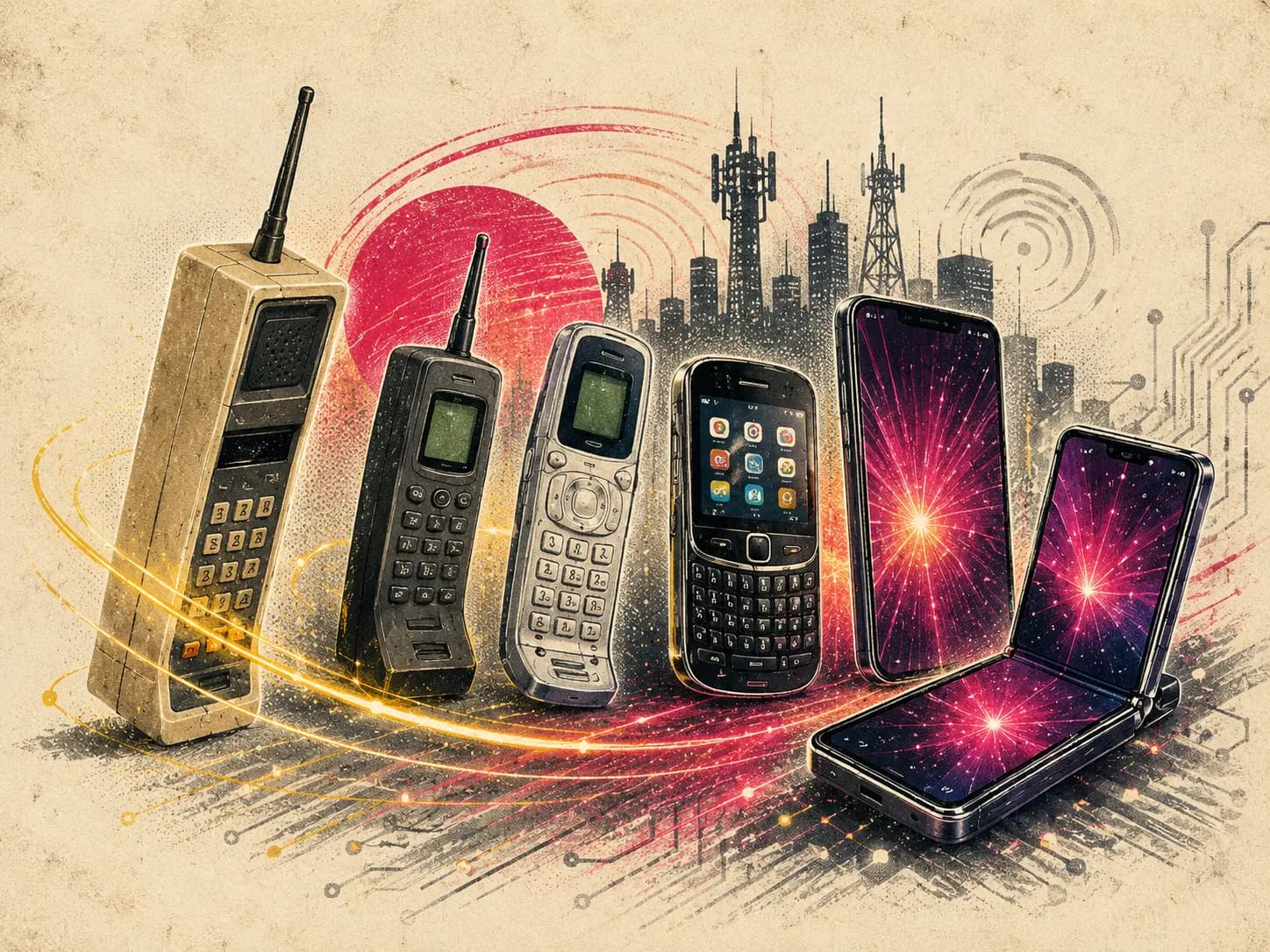
Infographic on the evolution of cell phones
The infographic below visually shows the evolution of cell phones, from the first portable devices to today's models with 5G, touchscreens, advanced cameras, apps, sensors, artificial intelligence, and cloud-connected features.
[Insert infographic on the evolution of cell phones here]
The image shows how each stage of mobile technology expanded the ways people could use cell phones. First came calls, followed by text messages, color screens, cameras, internet access, apps, digital payments, social media, maps, videos, remote work, and, more recently, AI-powered features.
What accelerated the evolution of cell phones
Several factors contributed to the rapid evolution of cell phones. The miniaturization of components made it possible to create smaller, lighter, and more powerful devices. Batteries improved, screens grew larger and more responsive, processors began handling complex tasks, and mobile networks advanced from one generation to the next.
2G, 3G, 4G, and 5G technologies were fundamental to this transformation. Each new generation increased speed, reliability, and connectivity, enabling cell phones to evolve from simple communication devices into complete platforms for accessing digital services.
Another decisive development was the arrival of apps. They enabled smartphones to meet a variety of needs: ordering food, booking rides, accessing banks, watching videos, buying products, scheduling services, tracking deliveries, chatting with businesses, and receiving real-time notifications.
Cell phones as business tools
The evolution of cell phones has also changed the relationship between businesses and customers. Today, many purchasing decisions begin on a smartphone. Users research, compare, chat, review, buy, and manage services directly from their phones.
For businesses, this represents a strategic opportunity. Having a digital presence tailored to mobile behavior is no longer just an advantage. Responsive websites, custom apps, notifications, digital catalogs, online ordering, WhatsApp support, and social media integration have become important tools for building relationships and generating sales.
This is where Web Robot Apps comes in, offering solutions for businesses that want to create apps easily and quickly, without needing to code. The platform enables businesses across different industries to have their own channel on their customers' phones, with features for promotion, customer service, communication, and showcasing products or services.
From basic cell phones to smart smartphones
The first cell phones focused on calls. Then came devices with SMS, calendars, simple games, and color screens. As mobile internet advanced, cell phones began accessing websites, email, and online content. Smartphones then ushered in a new way of interacting, built around touchscreens and apps.
Today, cell phones integrate high-quality cameras, location sensors, contactless payments, facial recognition, virtual assistants, cloud storage, and artificial intelligence features. The device is no longer just a communication tool; it has become a hub for productivity, entertainment, and digital engagement.
This transformation has also created opportunities for new business models. Restaurants, stores, markets, service providers, clinics, schools, residential communities, and local businesses can use apps to get closer to customers and offer a more direct, personalized experience.
The future of cell phones and the mobile experience
The future of cell phones will be increasingly integrated with artificial intelligence, 5G connectivity, the Internet of Things, wearable devices, digital payments, automation, and personalized services. Devices are likely to become even smarter, more connected, and more embedded in people's daily routines.
As mobile technology advances, user expectations are rising too. People expect speed, convenience, security, and easy access. Businesses with well-designed digital channels can stand out, improve customer service, and strengthen their brand online.
The evolution of cell phones shows that consumer behavior is becoming increasingly connected. That's why investing in mobile solutions is a way to keep up with this transformation and prepare your business for new opportunities.
Why your business needs to keep up with this evolution
Cell phones have become one of the main ways brands connect with consumers. When a business is present on a customer's smartphone, it has a better chance of being remembered, reached, and chosen when the need arises.
Custom apps help bring information together, promote updates, showcase products, make ordering easier, send notifications, and create more direct communication. For small businesses and local companies, this presence can mean more professionalism, greater convenience, and a closer connection with their audience.
With Web Robot Apps, your business can create a complete app to promote products, services, special offers, and important information in a simple, accessible way. The evolution of cell phones has opened up new possibilities, and having your own app is a practical way to be part of this transformation.
Frequently asked questions about the evolution of cell phones
When was the first cell phone invented?
The first major milestone in portable cell phone technology came in 1973, when a call was made using a mobile device. From there, the technology evolved, leading to commercial cell phones in the 1980s and modern smartphones.
What was the biggest change in cell phones over time?
The biggest change was the transformation of the cell phone into a multifunctional device. It went from being used only for calls to combining internet access, cameras, apps, maps, videos, payments, social media, and work tools.
Why have smartphones become so important?
Smartphones have become important because they bring communication, information, entertainment, shopping, services, and productivity together in one device. They accompany users through much of their daily routine.
How have apps changed the way people use cell phones?
Apps have expanded what cell phones can do, allowing users to access personalized services, place orders, buy products, receive notifications, chat with businesses, and handle tasks directly on their smartphones.
Can a small business have its own app?
Yes. With platforms like Web Robot Apps, small businesses can create apps to promote products, services, menus, catalogs, special offers, contact details, and useful information, without relying on advanced programming skills.
The evolution of cell phones represents one of the biggest technological transformations of recent decades.
From the first portable devices to smartphones with 5G and artificial intelligence, mobile technology has changed communication, shopping, work, and the way businesses connect with their customers.
For businesses looking to keep up with this shift, having a presence on mobile is a strategic decision. Visit Web Robot Apps and see how to create an app for your business easily and quickly, ready for the digital habits of today's consumers.