



May 16, 2026
Iris Scanner: How Can Technology Identify a Person by Their Eyes?
An iris scanner is one of the most intriguing and advanced biometric technologies for identifying people.
Instead of using passwords, cards, or fingerprints, this system analyzes a very specific part of the eyes: the iris, the colored region around the pupil.
What’s most interesting is that the iris has highly distinctive patterns. Like a fingerprint, it has unique features for each person, forming a kind of natural “visual signature.” That’s why iris scanners are used in systems that require greater security, accuracy, and control during identification.
What Is an Iris Scanner?
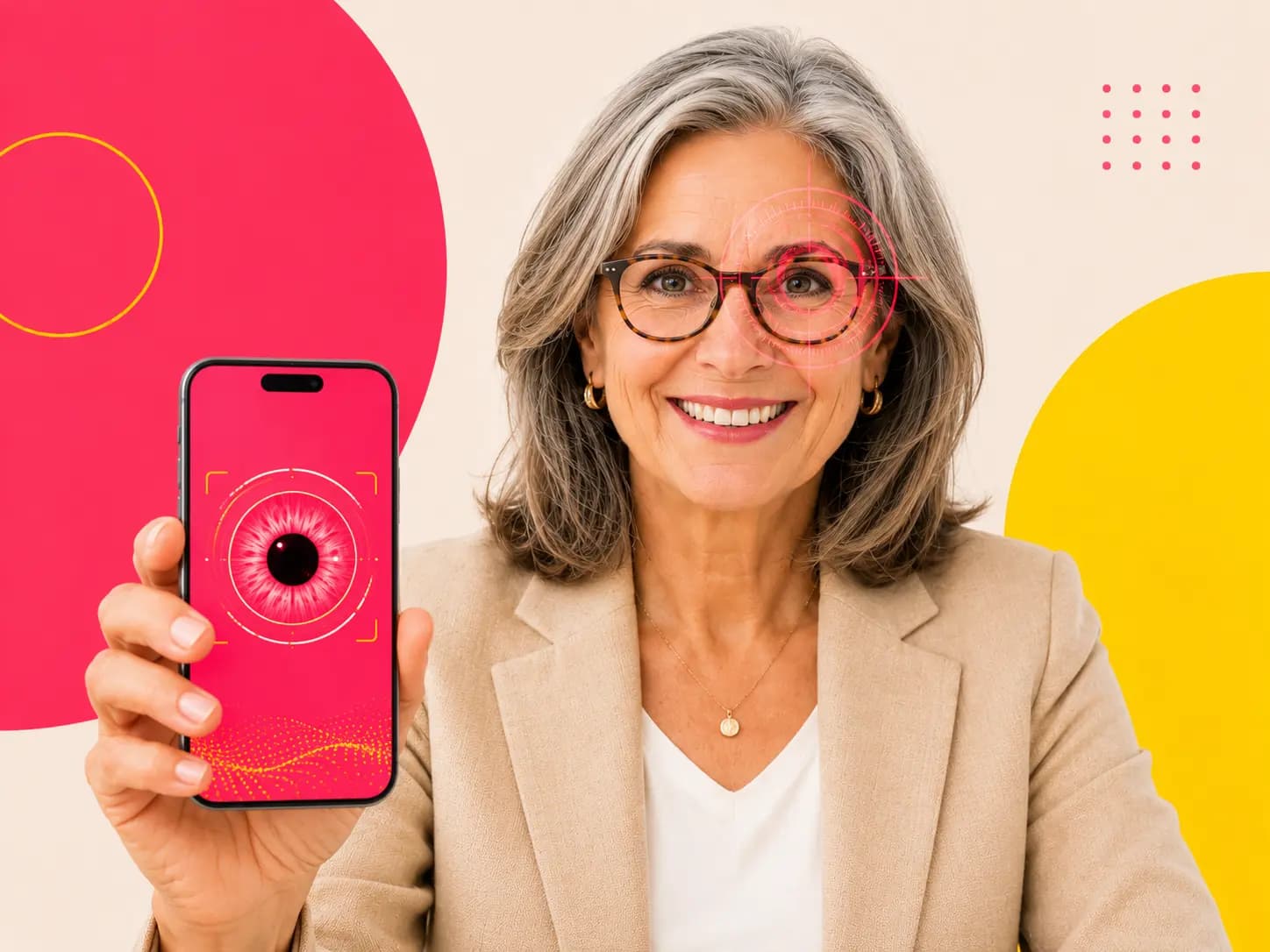
An iris scanner is a device or system that captures an image of the eyes and analyzes the patterns in the iris. These patterns can include lines, shapes, textures, and small variations that are difficult to notice with the naked eye but can be read by specialized technology.
After scanning, the system converts this information into biometric data. This makes it possible to compare a person’s iris with an existing record and confirm their identity quickly and automatically.
In practice, the person looks at the device, an image is captured, and the system verifies it. The whole process takes just a few seconds and requires no direct physical contact.
How Does an Iris Scanner Work in Practice?
An iris scanner works in three main stages: capture, analysis, and comparison.
First, the device records a detailed image of the eye area. The system then identifies specific points in the iris and converts this information into a biometric code. Finally, that code is compared with previously stored data.
If the information matches, access can be granted or the person’s identity can be confirmed. Otherwise, the system blocks the attempt or requests another verification.
This process is widely used in places where security needs to be enhanced, such as businesses, airports, banks, laboratories, restricted areas, residential buildings, hospitals, and access control systems.
Why Is the Iris Considered So Secure?
The iris is considered one of the most secure forms of biometrics because its patterns are highly individual. Even people in the same family have different irises. In addition, these features tend to remain relatively stable throughout adulthood.
Another important advantage is that iris scanning doesn’t rely on passwords that can be forgotten, cards that can be lost, or codes that can be shared. Identification is directly linked to a physical characteristic of the person.
This doesn’t mean the technology requires no safeguards. Like any digital system, an iris scanner needs to be supported by good security practices, data protection, proper storage of biometric information, and clear privacy policies.
Where Are Iris Scanners Already Being Used?
Iris scanners are already being used in a range of fields. At airports, they can help with passenger screening and identification. Businesses may use them to grant access to restricted areas. In banks and financial systems, they can support more secure authentication.
They’re also used in residential buildings, schools, hospitals, events, laboratories, government agencies, and corporate security projects. Similar biometric technologies have also been used in some mobile devices to unlock them and authenticate users.
The main advantage is convenience. Instead of relying on keys, badges, or passwords, a person can be recognized by their eyes.
Are Iris Scanners a Thing of the Future?
Although it may seem futuristic, iris scanning is already a reality. Over the next few years, its use is expected to expand in commercial, corporate, and institutional settings.
As digitization and automation continue to grow, along with the need to protect sensitive information, biometric solutions are likely to become even more widely used. Iris scanners stand out because they combine technology, security, and speed in a single process.
A Technology That Turns Your Eyes Into an Identity
Iris scanning shows how technology can turn a natural feature of the human body into an identification tool. What once seemed like something out of a science fiction movie is now part of modern security and access control systems.
More than just an intriguing innovation, this technology represents an important shift in how people, businesses, and institutions approach authentication, protection, and trust.
After all, in an increasingly digital world, correctly identifying who is accessing a place or system can make all the difference.